
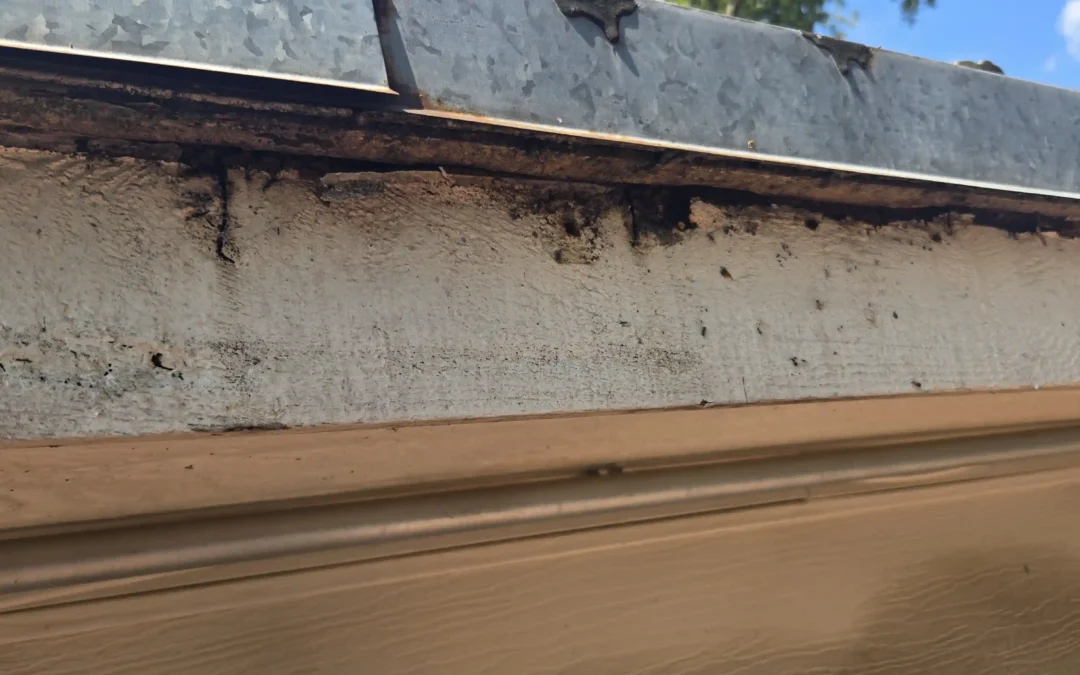
Fascia board repair in Houston, TX involves restoring or replacing the horizontal roofline trim attached along the rafter ends. Damage often develops when chronic gutter overflow, poorly integrated drip edge flashing, failed coatings, or trapped moisture allows water into the wood. Once deterioration becomes structural, gutters can lose a solid anchoring surface and the entire roofline drainage system may be affected.
Fascia is easy to overlook because it looks like exterior trim. In reality, it sits at one of the busiest intersections on the house: the roof edge, gutters, soffit, rafter tails, and drainage system all meet there.
In Houston, The Woodlands, Spring, Katy, Cypress, Sugar Land, Kingwood, and surrounding Southeast Texas communities, repeated rain exposure, high humidity, strong sun, and long hot seasons make correct roof-edge water management especially important.
But peeling paint or dark discoloration does not automatically mean the fascia is structurally rotten. The cause and depth of deterioration should be verified before boards are replaced.
What Does a Fascia Board Do?
The fascia runs horizontally along the lower edge of the roof, covering or finishing the ends of the rafters.
Depending on the home’s construction, there may be a structural sub-fascia behind the visible finished fascia. The roof decking and drip edge terminate above this assembly, while the soffit closes the underside of the eave.
The fascia also commonly provides the mounting surface for the gutter system.
That matters because a water-filled gutter can place substantial load on its fasteners. Hidden hangers or other brackets need sound material behind them to maintain alignment and the designed gutter pitch.
When fascia deteriorates, homeowners may notice gutters tilting, sagging, or pulling away.
However, the correct repair is not simply to replace whatever wood looks damaged. The contractor should determine why moisture reached the fascia in the first place.
The 5 Primary Causes of Rotted Fascia in Houston
1. Missing or Improperly Integrated Drip Edge
Water does not always fall straight down from a roof edge.
Surface tension and capillary action can cause runoff to track along roofing components. The roof edge, drip edge flashing, shingles, fascia, and gutter position therefore need to be evaluated as one water-management detail.
If that transition is damaged or incorrectly integrated, water may travel behind the gutter and repeatedly wet the fascia.
Painting the board may temporarily improve its appearance, but it does not correct the water path.
2. Chronic Gutter Overflow
One of the most common contributors to gutter fascia damage is repeated overflow.
Clogged outlets, incorrect gutter pitch, undersized downspouts, sagging sections, and concentrated roof-valley runoff can all cause water to spill over or behind the gutter.
During Houston’s intense rain events, a drainage problem may become obvious very quickly.
Repeated wetting can eventually damage coatings and expose joints, fastener holes, or vulnerable wood. The correct repair should therefore include diagnosing the gutter problem—not simply replacing the fascia underneath it.
3. Trapped Attic and Roofline Moisture
Not all fascia deterioration begins outside.
Soffits are often part of the attic’s intake ventilation system. When soffit vents are obstructed by insulation, incorrectly configured, or otherwise unable to provide adequate intake, attic airflow may not function as designed.
Moisture conditions inside the roof assembly should be investigated when deterioration appears to be developing from behind the fascia or sub-fascia.
That does not mean every ventilation problem causes fascia rot. Roof leaks, air leakage, condensation, plumbing or mechanical issues, and exterior water intrusion can create similar evidence.
A good soffit and fascia repair Houston inspection looks for the moisture source rather than assuming one.
4. Gutter Hanger and Fastener Failure
Older gutter systems may use spike-and-ferrule fasteners. Over time, movement and repeated loading can allow fasteners to loosen.
Modern systems frequently use hidden hangers secured to the fascia with structural screws or appropriate fasteners.
Regardless of the fastening method, the underlying material must be sound.
A loose gutter can change pitch and create standing water. Fastener penetrations in already compromised wood can also become additional moisture paths.
Simply installing a larger screw into deteriorated fascia does not restore the structural integrity of the board.
5. Unsealed Wood Joints and Weathering
Houston weather is hard on exterior coatings.
Sun and prolonged heat can age paint and sealants, while repeated humidity and rain expose weaknesses at butt joints, corners, end grain, nail penetrations, and cut edges.
Once coatings fail, moisture can enter vulnerable wood fibers and support fungal decay when conditions remain favorable.
This is why proper preparation matters during roof fascia repair. Depending on the material and repair scope, cut ends and joints may require appropriate priming, sealing, flashing, and exterior coating.
Warning Signs: How to Spot Rotted Fascia
Several conditions justify a closer inspection:
- Flaking, bubbling, or peeling paint
- Persistent dark staining along the roof edge
- Gutters sagging or tilting away from the house
- Gaps developing between the gutter and fascia
- Loose gutter or downspout brackets
- Visible cracking or deterioration around fasteners
- Soft or crumbling wood
- Insect activity around damaged roofline material
- Soffit deterioration near the same area
Peeling Paint Does Not Automatically Mean Rot
This distinction can save homeowners from unnecessary replacement.
Paint can fail because of UV exposure, poor surface preparation, age, or temporary moisture exposure while the underlying wood remains structurally serviceable.
A physical probe test helps determine the condition of the material.
A contractor can use an awl or similar tool to check suspicious areas. Sound wood should provide meaningful resistance. Wood that is unusually soft, spongy, crumbling, or easily penetrated may indicate deeper deterioration.
A moisture probe or meter can provide additional diagnostic information, but moisture readings should be interpreted in context.
The objective is simple: verify the condition before recommending replacement.
Fascia Repair vs. Replacement Decision Table
| Condition / Severity | Correction to Evaluate | Possible Material | Gutter Impact |
|---|---|---|---|
| Coating failure; wood remains sound | Prep, seal/prime and repaint | Existing exterior wood | Gutter may remain depending on access |
| Minor superficial deterioration | Remove unsound material, repair where appropriate, seal and coat | Compatible exterior repair material | Limited disturbance may be possible |
| Localized full-depth deterioration | Sectional fascia replacement/splice | Exterior-grade wood or compatible fascia product | Gutter section may require removal |
| Repeated moisture damage at corner | Correct water source and replace affected material | Project-specific exterior material | Corner/gutter alignment should be checked |
| Structural failure behind gutter | Replace damaged fascia and inspect sub-fascia/rafter tails | Exterior lumber or appropriate alternative | Gutter typically detached and realigned |
| Wider fascia/soffit deterioration | Open area and evaluate concealed framing | Wood/fiber-cement system as appropriate | Removal and reinstallation may be required |
What Is the Best Material for Fascia Repair in Houston?
There is no single material that is automatically correct for every house.
Properly prepared exterior wood—including suitable primed pine, cedar, or other project-appropriate lumber—can be used when it matches the existing roofline and construction.
James Hardie® fiber cement fascia or trim products may offer a lower-maintenance, moisture-resistant alternative in compatible applications. Fiber cement is not the same as structural lumber, however, so the assembly behind it still needs to provide appropriate structural support and fastening.
Material selection should account for the existing construction, rafter and sub-fascia condition, gutter attachment, manufacturer installation requirements, roof-edge geometry, and desired finished appearance.
Can You Replace Fascia Boards Without Removing the Gutters?
Sometimes a very localized repair may be accessible without removing an entire gutter run.
For significant rotted fascia repair in Houston, however, trying to slide replacement material behind an attached gutter is often a poor approach.
Leaving the gutter in place can prevent proper access to concealed damage. It may also make it difficult to inspect the sub-fascia, rafter tails, fastener locations, drip edge integration, and the back of the gutter itself.
There is also a risk of bending aluminum gutters during the repair.
A more complete process typically involves:
- Carefully detaching the affected gutter section.
- Opening the damaged roofline sufficiently to inspect concealed material.
- Checking the sub-fascia and accessible rafter tails.
- Removing structurally deteriorated material.
- Installing appropriate replacement material.
- Correcting relevant flashing or roof-edge water-management issues.
- Priming, sealing, and finishing as required.
- Reinstalling the gutter and verifying its pitch and alignment.
That last step matters. A repaired fascia with an incorrectly pitched gutter can recreate the conditions that contributed to the original problem.
Frequently Asked Questions About Fascia Board Repair
How do I know if my fascia is rotten or just needs paint?
Appearance alone is not enough. Peeling paint, staining, or surface mildew can exist while the underlying wood remains solid. A physical probe test, moisture evaluation, and inspection around joints and fasteners help determine whether deterioration is superficial or structural.
What is the best fascia material for Houston?
It depends on the roofline. Properly prepared exterior wood works well in many traditional assemblies, while compatible James Hardie fiber cement products can provide a moisture-resistant, lower-maintenance exterior finish. Neither eliminates the need for correct flashing, drainage, fastening, and maintenance.
Can rotted fascia damage roof decking or rafters?
The same moisture source affecting fascia can sometimes reach sub-fascia, rafter tails, soffits, or roof decking. That does not mean visible fascia damage automatically proves concealed structural damage. The exposed area should be inspected to determine the actual extent.
Does homeowners insurance cover fascia repair from water damage?
Coverage depends on the policy and cause of loss. Sudden storm-related damage may be treated differently from deterioration caused by long-term moisture exposure, neglected maintenance, or gradual rot. Homeowners should document the damage and confirm coverage directly with their insurer.
Can gutter guards be installed after fascia repair?
Yes, provided the gutter and roofline are structurally suitable. Existing gutters should be inspected for pitch, attachment, alignment, and condition first. TXN installs LeafBlaster Pro® stainless steel micro-mesh protection after confirming the underlying gutter system is appropriate for installation. مراجعة محتوى المقالات
Schedule a Comprehensive Roofline & Fascia Inspection
Effective fascia board repair in Houston, TX means finding more than damaged wood.
The gutter pitch and attachment, downspouts, roof valleys, drip edge, roof-edge water path, soffit condition, ventilation, sub-fascia, and accessible rafter tails may all need to be evaluated to determine why the damage occurred and how extensive it actually is.
The scope also varies with the length and depth of deterioration, height and accessibility, gutter removal requirements, soffit involvement, and concealed framing condition. That is why an accurate recommendation requires an on-site inspection rather than a flat repair price.
TXN Home Services provides roofline, fascia, soffit, gutter, roofing, and exterior repair services throughout Greater Houston and Southeast Texas.
Our team is professionally trained, insured, and experienced in exterior restoration and roofline water management.
If you are seeing peeling fascia, dark staining, soft wood, or gutters pulling away from the roofline, TXN Home Services can inspect the system and explain what actually needs repair.
TXN Home Services
Call or text: 346-460-9199
Website: TXNHomeServices.com
Built to last. Proven to protect.
