
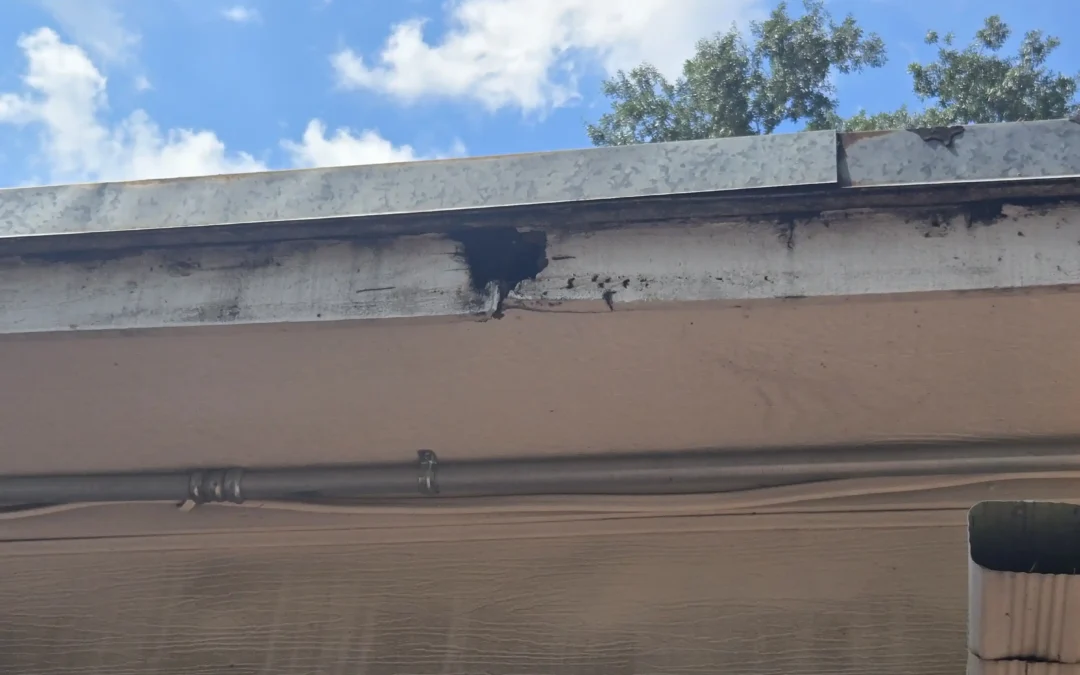
SEO Title: Signs of Rotting Fascia in Greater Houston: When to Repair or Replace It
Meta Description: Learn the early signs of rotting fascia, how gutter and roof-edge problems cause moisture damage, and when Greater Houston fascia boards should be repaired or replaced.
Signs Your Fascia Is Rotting Before the Damage Spreads
Peeling paint beneath a gutter corner, a dark stain along the roof edge, or a gutter beginning to pull away from the house may appear to be minor exterior problems. In reality, these conditions can be early signs of rotting fascia caused by repeated moisture exposure.
Fascia deterioration is rarely just a paint or wood problem. It is often evidence of a larger roofline water-management failure involving leaking gutter corners, improper gutter pitch, missing drip edge, damaged flashing, or rainwater traveling behind the gutter trough.
Because Greater Houston homes face frequent heavy rain, high humidity, and wind-driven rain, even a small moisture path can repeatedly soak the same section of wood. Identifying the water source early can prevent the damage from spreading into the soffit, rafter tails, or roof decking.
What Does the Fascia Board Do?
The roof fascia is the vertical board installed along the lower edge of the roof. It covers the exposed ends of the rafter tails, helps protect the roof eaves, and creates a finished transition between the roof and exterior walls.
The fascia also provides an important mounting surface for the gutter system. In many installations, hidden hangers and gutter fasteners are secured through the fascia into structurally sound framing behind it.
A properly functioning fascia board helps:
- Protect rafter tails from direct weather exposure
- Close the roof edge against moisture and pest entry
- Support gutters and their mounting hardware
- Create a transition between the roof decking and soffit
- Help maintain a straight, stable roofline
When fascia board rot develops, the problem can affect more than appearance. Damaged wood may lose the strength required to support a water-filled gutter, particularly during Greater Houston downpours.
Early Signs of Rotting Fascia Every Homeowner Should Watch For
The earliest signs of fascia damage can be subtle. One isolated stain does not automatically prove that the wood is rotten, but repeated changes in the same area deserve closer inspection.
Peeling, Bubbling, or Blistering Paint
Exterior paint helps protect wood fascia from sunlight and moisture. When water enters the wood fibers from behind or through an unsealed joint, it can become trapped beneath the coating.
As the moisture expands and attempts to escape, the paint may:
- Bubble or blister
- Crack around joints and fasteners
- Peel away in strips
- Separate from the lower edge of the board
- Fail repeatedly after repainting
Paint blistering may indicate a coating problem, improper surface preparation, or developing moisture damage. It does not always mean the board requires replacement.
However, if the paint continues to fail after previous repairs, the underlying moisture path should be identified before applying new primer and exterior paint.
Discoloration, Dark Stains, and Fungal Growth
Brown, gray, or black staining may develop where water repeatedly contacts the fascia. Common locations include:
- Beneath leaking gutter corners
- Behind downspout outlets
- Below roof valleys
- Along separated gutter joints
- Near damaged or missing drip edge
- Behind gutter sections that sag or pull away
Dark staining can result from dirt, metal runoff, algae, mildew, or moisture exposure. It should not automatically be labeled fungal rot based on appearance alone.
More concerning conditions include staining that expands over time, remains damp long after the rain stops, or appears alongside soft wood, separated joints, or recurring paint failure.
Soft, Spongy, or Crumbling Wood
Softness is one of the clearest warning signs that the wood fibers may be losing structural integrity.
Homeowners can visually inspect safely accessible fascia from the ground or a stable location. They should not climb onto the roof or lean from an unsecured ladder.
A professional inspector may carefully probe a suspected area to determine whether the wood is:
- Firm and structurally sound
- Soft only at the surface
- Spongy below the paint layer
- Crumbling around fasteners
- Splitting along the wood grain
- Separating at joints or corners
A rotted fascia board may no longer hold hidden hangers or gutter fasteners securely. As the attachment points weaken, the gutter can sag, twist, or pull away from the roof edge.
Signs of Rotting Fascia Behind the Gutter System
Fascia damage often begins where it cannot be seen easily: behind the gutter.
The gutter system should collect roof runoff and direct it toward downspouts. When that process fails, water may travel between the gutter trough and fascia.
Common causes of fascia rot behind gutters include:
- Leaking gutter corners or end caps
- Incorrect gutter pitch
- Clogged or undersized downspouts
- Gutters installed too low or too far from the roof edge
- Loose hidden hangers
- Gaps between the drip edge and gutter
- A missing or incorrectly positioned gutter apron
- Concentrated runoff below roof valleys
- Damaged valley flashing
- Water overshooting the gutter during heavy rain
Wind-driven rain can also enter separated joints or exposed roof-edge areas, especially where old sealant, deteriorated paint, or incorrectly integrated flashing leaves the wood vulnerable.
Replacing the visible wood without correcting the source of the water is usually a temporary and wasteful repair. The new fascia may begin absorbing moisture in the same location after the next series of storms.
A complete evaluation should trace the moisture path from the roof surface to the final drainage point.
Secondary Consequences: Pest Entry and Structural Spread
Moisture-damaged wood is easier for insects and animals to penetrate than dry, structurally sound material.
Possible signs of pest activity include:
- Small holes in the fascia or soffit
- Sawdust-like material near the roof eaves
- Insects entering damaged joints
- Birds nesting behind separated boards
- Squirrel activity around roof-edge openings
- Scratching sounds near the attic perimeter
Termites may consume wood fibers, while carpenter ants commonly excavate wood that has already been softened by moisture. Their presence does not necessarily prove that water caused the original damage, but fungal rot and wood decay can create favorable conditions for pest activity.
As the damage progresses, it may spread:
- Backward into the rafter tails
- Downward into the soffit
- Upward toward the roof decking
- Along connected fascia sections
- Around gutter fastener penetrations
Advanced damage can turn a localized fascia board repair into a wider soffit and fascia repair involving framing, roof-edge materials, and gutter removal.
Fascia Board Repair vs. Replacement
The correct approach depends on the depth, location, and structural effect of the damage.
When Fascia Board Repair May Be Appropriate
Repair may be reasonable when:
- The wood remains firm
- Damage is shallow and highly localized
- Paint failure has not progressed into significant wood decay
- A separated joint can be properly secured and sealed
- Minor surface deterioration can be removed
- The moisture source has been identified and corrected
In these situations, the work may include drying the area, removing loose material, preparing the surface, sealing joints, and applying suitable primer and exterior paint.
A repair should not simply cover damp wood with filler or caulk. The area must be dry and structurally stable before finishing.
When Fascia Board Replacement Is Necessary
Fascia board replacement is generally the safer choice when the wood is:
- Soft or spongy below the surface
- Crumbling around gutter fasteners
- Extensively split or warped
- Affected across a long section
- Unable to support hidden hangers
- Separating from rafter tails or backing material
- Accompanied by soffit or roof decking damage
The damaged section should be removed far enough to reach sound material. The surrounding roof edge, rafter tails, soffit, flashing, and gutter attachment points should then be inspected before the new board is installed.
The gutter may need to be temporarily removed so the contractor can evaluate concealed damage and complete the rotted fascia repair correctly.
Frequently Asked Questions
What are the first signs of rotting fascia?
Early warning signs include peeling paint, recurring stains, swelling, separated joints, soft wood, visible cracks, and gutters beginning to pull away. These conditions may indicate moisture damage, but the wood should be physically inspected before deciding whether repair or replacement is required.
Can leaking or overflowing gutters cause fascia rot?
Yes. Water leaking from gutter corners, overflowing the back edge, or traveling behind the gutter can repeatedly wet the fascia. Continued exposure may lead to fungal rot and loss of structural strength.
Does peeling paint always mean the fascia is rotten?
No. Peeling paint can result from age, poor surface preparation, ultraviolet exposure, or trapped moisture. It becomes more concerning when combined with staining, softness, swelling, or repeated coating failure.
Can rotted fascia be repaired, or should it be replaced?
Shallow, localized damage may sometimes be repairable after the moisture source is corrected. Soft, crumbling, or structurally weakened wood generally requires replacement, especially when it supports gutter fasteners.
Can fascia rot spread to the soffit and roof decking?
Yes. Moisture can move through connected roofline materials and affect the soffit, rafter tails, roof decking, or nearby framing. Early inspection helps determine whether the problem remains localized.
Protecting Your Greater Houston Home’s Roofline
Recognizing the signs of rotting fascia early can prevent a small roof-edge issue from becoming a larger structural repair. The important step is not simply replacing visibly damaged wood. The gutter alignment, drip edge, flashing, downspouts, roof valleys, and surrounding drainage system must also be evaluated.
TXN Home Services provides professional roofline inspections and fascia repair in Greater Houston. Our team evaluates the fascia, soffit, gutter attachments, roof-edge components, and hidden moisture paths before recommending fascia board repair or replacement.
An accurate repair scope and estimate require an on-site physical inspection because the full extent of the damage may not be visible until the gutters or affected materials are carefully examined.
Call or text TXN Home Services at 346-460-9199 or visit TXNHomeServices.com to schedule a free fascia, gutter, and roofline evaluation.
