
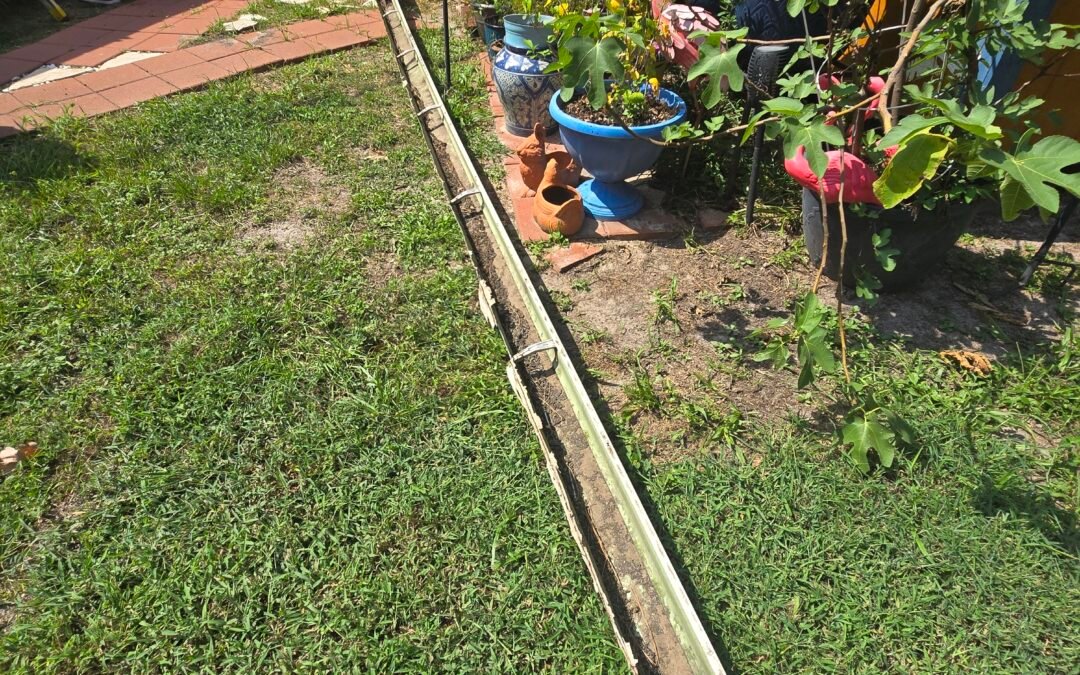
When gutters start pulling away from the house, the usual causes are rotted fascia that no longer holds screws, failing or overspaced hangers, standing water or wet debris, outdated spike-and-ferrule fasteners, and repeated expansion and contraction from Texas heat. Left alone, loose gutters can damage the fascia, soffit, siding, drainage path, and eventually allow an entire gutter run to fail.
Why Are Gutters Pulling Away from the House?
Why Are My Gutter Hangers Pulling Out of the Fascia?
Weak or rotted fascia is a common cause.
In Greater Houston, moisture, humidity, wind-driven rain, overflowing gutters, and roof-edge drainage problems can soften wood behind the gutter. Missing or incorrectly positioned drip edge can also allow water to travel behind the system.
Once the fascia loses strength, hanger screws no longer have solid wood to grip. Driving the same screw back into soft wood may hold briefly, but it does not correct the underlying damage.
See [Link to: Signs of Rotting Fascia] if you notice peeling paint, dark staining, soft wood, or water marks.
Failing Fasteners: Gutter Spikes vs. Hidden Hangers
Older systems often use long spikes driven through the gutter face into the fascia. Over time, those spikes can loosen as the wood moves, the gutter flexes, and weather cycles work the fastener outward.
Modern hidden hangers typically use threaded screws, providing a more secure attachment when installed into sound fascia and spaced correctly.
Improper Gutter Hanger Spacing
Hanger spacing matters because each bracket shares the weight of the gutter, rainwater, and debris.
On many residential systems, hangers are commonly placed about 24 to 36 inches apart, although spacing should be adjusted for gutter size, roof layout, material, and site conditions.
When hangers are stretched 4 to 5 feet apart, unsupported sections can flex, leading to sagging gutters, loose screws, poor pitch, and separation at corners or ends.
Can Heavy Rain Cause Gutters to Pull Away from the Roofline?
Yes, especially when poor pitch, clogged downspouts, or debris buildup already exist.
Wet leaves and standing water add significant weight. During a Houston-area downpour, water can collect quickly if the run is not pitched correctly or the outlets cannot drain efficiently. That load pulls downward on hangers and can accelerate failure when the fascia is already weak.
See https://txnhomeservices.com/project/gutter-and-fascia-repairs/
How Texas Heat and Storm Cycles Affect Loose Gutters
Aluminum expands and contracts as temperatures change, creating repeated movement at fasteners, seams, corners, and mounting points. Heat usually is not the only cause, but it can worsen an already weak installation before heavy rain adds sudden load.
Risks of Ignoring Loose or Sagging Gutters
A gutter pulling away is more than a cosmetic issue:
- Water can run behind the gutter and soak fascia or soffit.
- Overflow can damage siding and exterior trim.
- Uncontrolled runoff can erode soil near vulnerable foundation areas.
- Sagging sections can hold water and become even heavier.
- Corners, outlets, or downspouts can separate.
- A long gutter run can eventually pull loose and fall.
Ground-Level Diagnostic Checklist
From the ground, look for:
- Visible daylight or a widening gap between the gutter and fascia.
- Spike heads or screws sticking out.
- A sagging “belly” in the middle of a run.
- Water streaks, peeling paint, or dark staining behind the gutter.
- Overflow during rain even when a downspout appears open.
Avoid climbing or pulling on a loose gutter unless you are trained and equipped for roof-level work.
How Do You Fix a Loose or Sagging Gutter in Texas?
The right repair depends on why the gutter moved.
Simply driving an old screw back into damaged wood rarely provides a durable fix. Professional repairs may include:
- Replacing rotted or weak fascia.
- Upgrading old spikes to heavy-duty hidden hangers with threaded screws.
- Adding hangers where spacing is too wide.
- Re-pitching the gutter toward the downspouts.
- Securing and resealing corners, end caps, and outlets.
- Replacing bent or permanently distorted sections.
If the gutter is still serviceable, repair and realignment may be enough. Badly damaged or repeatedly separating runs may require partial or full re-installation.
TXN Home Services evaluates the roof edge, fascia, gutter condition, drainage layout, measurements, and access before recommending a solution. Learn more at [Link to: Houston Gutter Repair and Realignment Services.
Frequently Asked Questions
Can you fix a gutter pulling away without replacing the whole system?
Yes. If the gutter is serviceable and the fascia is sound or repairable, a contractor may reinforce the run, replace fasteners, add hangers, and correct the pitch without replacing everything.
How much does it cost to fix loose or sagging gutters in Houston?
Cost depends on gutter length, height, fascia condition, access, hanger replacement, pitch correction, and damaged sections. An on-site inspection is the best way to prepare an accurate proposal.
Why do gutter spikes keep coming loose?
Smooth gutter spikes can work outward as the fascia moves, the gutter flexes, and weather adds repeated stress. Hidden hangers with threaded screws generally hold better in sound fascia.
How do I know if the fascia behind my loose gutter is rotted?
Look for soft or swollen wood, peeling paint, dark staining, gaps, or screws that will not stay tight. A contractor can inspect behind the gutter to confirm the fascia condition.
Schedule a Free Gutter and Roofline Inspection
If your gutters are pulling away from the house, identify whether the problem is the fasteners, hanger spacing, gutter pitch, or the fascia behind the system before the damage spreads.
TXN Home Services provides gutter repair, realignment, seamless gutter installation, and fascia repair throughout Greater Houston and Southeast Texas.
Call or text 346-460-9199 or visit www.TXNHomeServices.com to schedule a free gutter and roofline inspection before loose gutters lead to more expensive fascia or drainage damage.
Built to last. Proven to protect.