
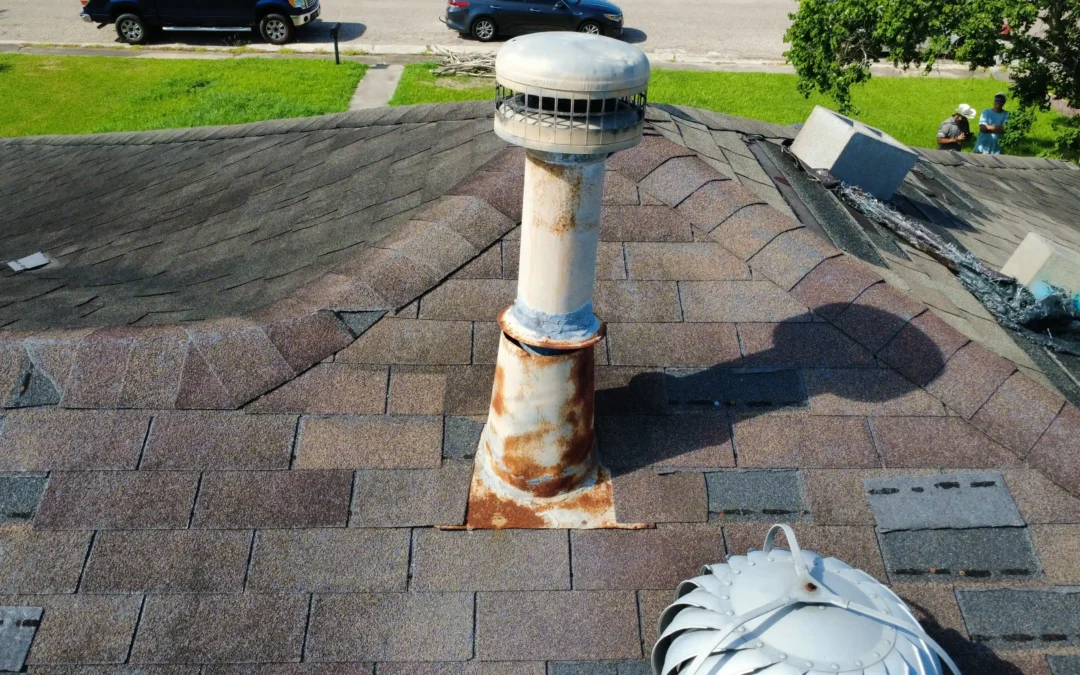
A roof leak around a vent pipe is commonly caused by a cracked or deteriorated rubber pipe-boot collar, damaged flashing, exposed fasteners, or failed sealing around the penetration. Greater Houston heat, UV exposure, thermal movement, and wind-driven rain can accelerate deterioration. Because flashing materials and installation quality vary, a leaking pipe boot may fail years before the surrounding architectural shingles need replacement.
What Is a Roof Vent Pipe Boot?
Plumbing vent pipes allow gases from the home’s drain system to safely exit through the roof. Where that PVC pipe penetrates the roof decking, the opening must be properly flashed to keep rainwater outside.
A typical residential assembly includes:
- The PVC plumbing vent stack
- A metal, thermoplastic, or combination flashing base
- A flexible rubber or synthetic collar around the pipe
- Shingles integrated around the flashing
- Properly positioned roofing fasteners
The flashing base directs water around the penetration while the collar forms a tight seal around the pipe.
The upper section of properly installed flashing is integrated beneath the shingles, while the lower portion directs water over the roofing surface. Manufacturers also emphasize correct flashing size, UV resistance, temperature movement, and concealed fasteners as important installation details.
When any part of that assembly fails, water can enter around the vent pipe and travel into the attic.
Why Is Water Dripping From My Ceiling Under a Roof Vent Pipe?
If a stain appears near a bathroom, kitchen, or laundry area after heavy rain, the plumbing vent penetration is one possible source.
However, water can travel along decking, rafters, pipes, and insulation before becoming visible inside the home. A ceiling stain beneath a vent pipe does not automatically prove that the pipe boot is the source.
A roof inspection should confirm the actual entry point before repairs begin.
How Do Texas Heat and UV Rays Damage Rubber Pipe Boots?
Rubber and synthetic flashing materials spend years exposed to direct sunlight and changing roof temperatures.
Over time, some collars can:
- Become harder and less flexible
- Shrink around the PVC pipe
- Develop surface cracks
- Split along the edge of the pipe
- Lose their ability to maintain a tight seal
Greater Houston’s long periods of heat and strong sunlight can add stress to exposed roofing components.
There is no reliable universal rule that every pipe boot lasts a specific number of years. Different flashing materials have significantly different designs and expected service lives. Manufacturers themselves note that extreme heat, cold, hail, UV exposure, and roof lifespan can affect flashing performance.
Wind-Driven Rain Finds Small Openings
A small crack may not leak during every light rain.
During Gulf Coast thunderstorms, wind can push water across the roof rather than allowing it to travel only straight downhill.
That water can find:
- A split around the pipe collar
- A damaged flashing edge
- An exposed nail
- A poorly sealed repair
- A gap between flashing and roofing material
This is one reason homeowners sometimes notice a pipe jack roof leak only after a strong storm.
Improper Fastener Placement Can Create Leak Points
Roof flashing should be installed so water sheds over the assembly rather than reaching exposed penetrations.
When nails are left exposed in vulnerable areas, poorly sealed, or begin backing out, they can become entry points for moisture.
Rusting fasteners may also indicate that water has been reaching an area repeatedly.
Previous Caulk Repairs Can Fail
Sealant has legitimate roofing applications, but repeatedly spreading roofing cement or silicone across a deteriorated boot is not the same as correcting the failed component.
Heat, UV exposure, movement, dirty surfaces, and incompatible materials can all affect sealant performance.
If the rubber collar has physically split or the flashing itself is failing, covering the damage with more sealant may only postpone the repair.
Homeowner Diagnostic Checklist
Homeowners can look for several warning signs without climbing onto the roof:
- Brown or yellow ceiling rings near bathrooms, kitchens, or laundry areas
- Damp insulation near a plumbing vent
- Water trails running down a PVC vent pipe
- Bubbling paint or peeling drywall tape
- Wet roof decking visible from the attic after rainfall
- Dark staining around the roof penetration
During a daytime attic inspection, unusual gaps or visible light around a penetration deserve further investigation. Do not assume every visible gap is the leak source, and avoid walking through attic areas where footing is unsafe.
If the leak appeared after severe weather, also consider [Link to: Roof Inspections After a Hail Storm].
Why Roofing Caulk Is Not a Permanent Solution for a Failed Boot
A cracked pipe boot is a component failure.
If water continues entering behind a temporary patch, the visible ceiling stain may be only part of the problem.
Continued moisture can affect:
- Roof decking
- Attic insulation
- Ceiling drywall
- Wood framing
- Interior finishes
Persistent dampness can also create conditions that support microbial or mold growth.
That is why a recurring roof pipe flashing leak should be diagnosed at the roof rather than repeatedly covered from the interior.
Can You Replace a Roof Pipe Boot Without Replacing the Whole Roof?
Often, yes.
If the surrounding shingles, decking, and roof system remain serviceable, a localized pipe-boot repair may be possible without replacing the entire roof.
A professional repair typically involves evaluating the surrounding shingles and decking, carefully accessing the flashing, removing the failed component, installing correctly sized new flashing, fastening it according to the roofing system, and restoring the shingles so water sheds properly.
Depending on the existing roof and flashing condition, certain systems may also allow an approved replacement rain collar over an otherwise sound flashing base.
The correct repair depends on what failed—not simply where caulk can be applied.
Pipe Boot Repair and a Houston Roof Tune-Up
When one penetration has deteriorated, it can make sense to inspect other common maintenance points at the same time.
A roof tune up Houston homeowners receive may include evaluation of:
- Plumbing vent boots
- Pipe jacks and roof vents
- Exposed or raised fasteners
- Deteriorated sealant
- Minor shingle damage
- Flashing conditions
- Other vulnerable roof penetrations
Repairs should still be based on actual roof condition. A tune-up does not make an aging roof new or guarantee that unrelated leaks cannot occur later.
See Roof Tune-Up vs Roof Repair: What Is the Difference?.
Frequently Asked Questions
How long does a rubber roof pipe boot typically last in Texas?
There is no fixed lifespan. UV exposure, heat, boot material, installation quality, roof pitch, and storm exposure all affect service life. Some boots fail considerably earlier than the surrounding shingles.
Can a roof leak around a vent pipe cause mold behind drywall?
It can. Persistent moisture inside insulation, decking, or drywall can create conditions that support mold growth, especially when a slow leak remains unnoticed.
Do I need a full roof replacement if my pipe boot is leaking?
Usually not solely because of a failed boot. If the surrounding roof is still serviceable, the pipe flashing can often be repaired or replaced independently.
What is included in a Houston roof tune-up?
Scope varies by roof, but it may include inspecting pipe boots, vents, exposed fasteners, flashing, sealant, and minor shingle issues, then correcting appropriate maintenance items identified during inspection.
Get a Roof Leak Checked Before the Damage Spreads
A small vent-pipe leak can continue wetting insulation, decking, and drywall every time it rains.
If you see a ceiling stain, attic moisture, or water near a plumbing vent, TXN Home Services can inspect the roof, identify the source, and determine whether you need a pipe-boot repair, targeted roof repair, or roof tune-up.
Visit [Link to: Greater Houston Roof Leak Repair Services], call or text 346-460-9199, or visit www.TXNHomeServices.com to schedule a roof leak inspection in Greater Houston and Southeast Texas.
Built to last. Proven to protect.