
Why Size Matterze can be the difference between a home that drains properly and a home that suffers from overflow, fascia damage, soil erosion, and foundation concerns. In Texas, gutter problems are not always caused by clogs. Many start because the gutter system was undersized from day one.
Why Gutter Size Matters More Than Most Homeowners Think
When homeowners see water spilling over the front of their gutters, the first thought is usually, “My gutters must be clogged.” Sometimes that is true. Leaves, pine needles, roof grit, and debris can block water flow. But in many Houston-area homes, the real problem is not debris. It is design.
A gutter system has one job: collect roof water and move it away from the home safely. To do that, the system must be sized for the roof area, roof pitch, rainfall intensity, valley locations, and downspout capacity. If any part of that system is too small, water backs up, spills over, or runs behind the gutter.
That is why Texas home gutter size should never be chosen by habit or by price alone. A properly designed gutter system starts with understanding how much water the roof is sending into each section of gutter.
Why Texas Rain Demands More
Houston and Southeast Texas are not light-rain markets. Homes in this region face sudden downpours, tropical moisture, long storm systems, and intense roof runoff. NOAA Atlas 14 updated rainfall frequency data for Texas and showed that major rainfall estimates around Houston increased significantly compared to older design assumptions.
For homeowners, that means a gutter system that may have looked “standard” years ago can now perform poorly during heavy rain. A small gutter, limited downspout capacity, or long gutter run without enough drainage can quickly become overwhelmed.
This is especially true on homes with:
- Steep roof pitches
- Large roof planes
- Multiple roof valleys
- Long gutter runs
- Two-story drainage areas
- Pine trees and heavy roof debris
- Limited or undersized downspouts
In these cases, gutter overflow may not be a maintenance issue. It may be a sizing issue.
5-Inch vs. 6-Inch Gutters: What Is the Difference?
Many builder-grade homes are installed with 5-inch gutters because they are common, affordable, and suitable for some smaller roof areas. But for many Texas homes, especially in the Houston area, 6-inch gutters provide a stronger drainage solution.
| Feature | 5-Inch Gutters | 6-Inch Gutters |
|---|---|---|
| Best For | Smaller roofs, simple rooflines, lighter runoff areas | Larger roofs, heavy rain zones, steep roofs, complex rooflines |
| Water Capacity | Lower capacity | Higher capacity for heavy rain |
| Common Downspouts | Often 2×3 downspouts | Often paired with larger 3×4 downspouts |
| Performance in Valleys | More likely to overflow if water is concentrated | Better suited for high-flow valley areas |
| Houston-Area Suitability | Works on select homes | Often the better choice for Texas rain |
| Long-Term Protection | May be limited on larger homes | Better margin of safety when properly installed |
The key is not just the gutter size. The entire system must work together. A 6-inch gutter with too few downspouts can still fail. A larger gutter with poor pitch can still hold water. A good gutter system needs correct sizing, correct slope, proper outlet placement, and enough downspout capacity to move water out fast.
Signs Your Gutters May Be Undersized
If your gutters overflow only during intense storms, it does not automatically mean they are clogged. These signs may point to an undersized or poorly designed system:
- Water spills over the front during heavy rain even after cleaning.
- Overflow happens near roof valleys where large amounts of water collect.
- Water runs behind the gutter and stains the fascia or soffit.
- Soil washes out under the drip line after storms.
- Mulch or landscaping gets pushed away by roof runoff.
- Water pools near the foundation.
- Gutter corners leak or separate because water backs up.
- Long gutter runs have only one downspout.
- Downspouts overflow, gurgle, or cannot keep up.
- The same gutter repair problem keeps coming back.
When these symptoms appear, cleaning alone may not solve the problem. The system may need a better drainage design.
Why Downspout Capacity Is Just as Important
A gutter is only as effective as its exit points. If water enters the gutter faster than it can leave, overflow is unavoidable.
That is why downspout capacity matters. Larger 3×4 downspouts can move more water than smaller 2×3 downspouts, and placement matters just as much as size. A long 50-foot gutter run with one downspout at the end may struggle during Texas storms, especially if several roof sections drain into that same run.
Proper downspout design should consider:
- How much roof area drains into the gutter
- Where valleys discharge water
- Whether water needs to be split between multiple exits
- Where water can safely discharge away from the home
- Whether underground drains or extensions are restricting flow
Many gutter repair Houston calls are not caused by bad aluminum or bad sealant. They are caused by poor water movement.
Common Installation Mistakes That Cause Gutter Failure
A gutter system can be the right size and still fail if it is installed incorrectly. TXN Home Services often sees repair issues caused by:
- Gutters installed too low below the roof edge
- Water missing the gutter during fast runoff
- Poor pitch that leaves standing water
- Small outlets cut into larger gutters
- Not enough downspouts
- Missing splash guards at valleys
- Weak hangers or sagging sections
- Gutters installed without respecting the drip edge and fascia condition
- Leaf protection installed over a system that was already undersized
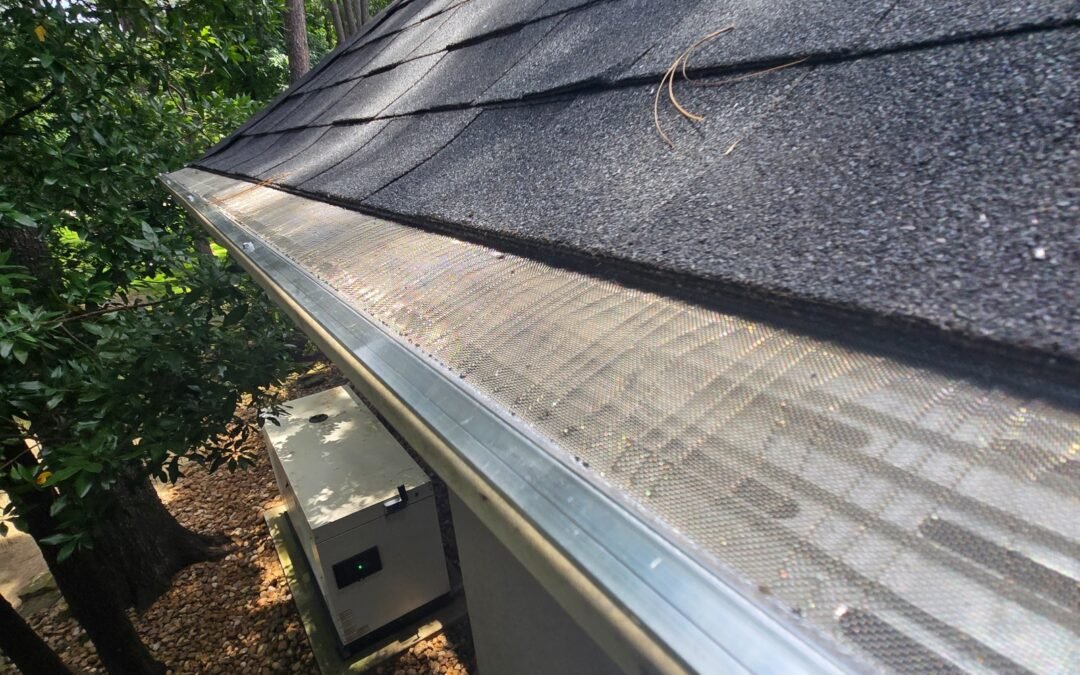
Gutter protection can help prevent clogs, but it does not fix an undersized system. If the gutter and downspouts cannot handle the roof water, adding a cover will not solve the drainage problem.
How TXN Approaches Gutter Sizing Differently
TXN Home Services does not treat gutters as a one-size-fits-all installation. Our team looks at the roof, the water path, the fascia condition, the valleys, and the downspout layout before recommending a system.
For many Houston-area homes, that means installing 6-inch seamless gutters made from heavy-gauge aluminum, paired with properly placed downspouts and the right drainage details. In high-flow areas, we may recommend splash guards, larger outlets, additional downspouts, or LeafBlaster Pro gutter protection where debris control is needed.
The goal is simple: move water away from the home before it damages the fascia, soffit, siding, landscaping, or foundation area.
The Bottom Line
If your gutters overflow during heavy rain, do not assume the only problem is a clog. Your home may have an undersized gutter system, limited downspout capacity, poor pitch, or a layout that was never designed for Texas rainfall.
The right gutter size protects more than the roofline. It helps protect your home’s exterior, foundation area, landscaping, and long-term maintenance costs.
If you are dealing with gutter overflow or repeated gutter repair issues in Houston or the surrounding Southeast Texas area, contact TXN Home Services for a free inspection and estimate.
Call or text TXN Home Services today.
TXN Home Services
Phone: 346-460-9199
Website: www.TXNHomeServices.com
Built to last. Proven to protect.
