
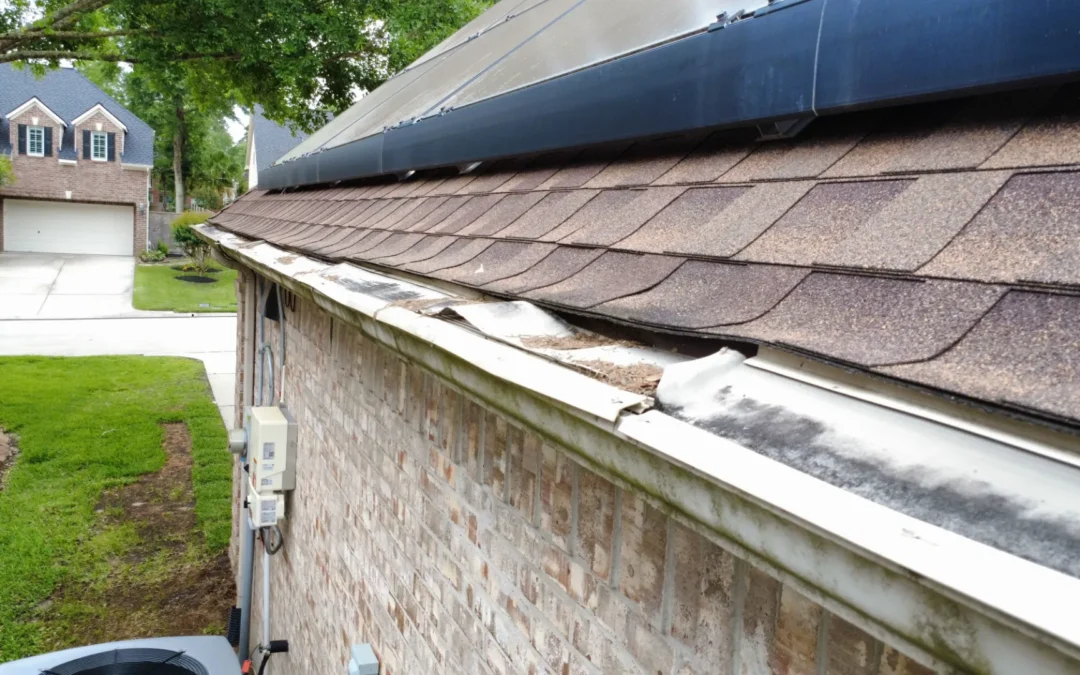
Texas weather is tough on gutter systems. Between extreme heat, sudden heavy rain, pine needles, roof grit, and long storm seasons, a gutter filter that looks fine on day one can start causing problems faster than many homeowners expect. If you have water running over your gutters, plastic panels sagging, or debris building up on top of your gutter guards, the issue may not be your gutters alone. It may be the type of gutter protection installed.
Many homeowners search for “gutter guard repair near me” after they realize their existing PVC or plastic gutter filter is still allowing clogs, overflow, or water damage around the fascia, soffit, siding, or foundation. This article explains why PVC gutter filters often fail in Texas and what a stronger long-term gutter overflow solution looks like.
The Quick Answer: Why PVC Gutter Filters Fail
PVC gutter filters fail because plastic can warp, sag, crack, or lose shape under Texas heat and UV exposure. Once the filter is no longer sitting correctly, pine needles, roof grit, leaves, and heavy rain can overwhelm the system and cause overflow.
A gutter protection system needs to do more than block large leaves. In Texas, it must handle heat, fast water flow, small debris, roof granules, pine needles, and repeated expansion and contraction.
Texas Heat Can Warp Plastic Gutter Filters
Texas heat is one of the biggest reasons plastic gutter guard failure happens.
PVC and plastic materials expand when they get hot and contract when temperatures drop. Over time, that movement can cause panels to shift, bow, lift, or create gaps. Once the filter loses its original shape, water may no longer flow properly into the gutter.
In areas like Houston, The Woodlands, Kingwood, Spring, Conroe, Katy, and Cypress, roof edges can get extremely hot during the summer. A plastic filter sitting directly along the roofline may deal with sun exposure for years. That heat can slowly weaken the material.
Common heat-related PVC gutter filter problems include:
- Warped panels
- Plastic becoming brittle
- Gaps along the gutter edge
- Sections lifting out of place
- Loose corners
- Uneven water flow
- Panels sagging into the gutter
A small gap may not seem like a major problem, but it can allow pine needles, shingle grit, leaves, and roof debris to enter the gutter. It can also cause water to miss the gutter opening during heavy rain.
Heavy Rain Exposes Weak Gutter Protection Systems
A gutter guard might look like it works during light rain, but Texas downpours are different. Heavy rain quickly exposes weak gutter protection systems.
When a PVC gutter filter is clogged, warped, too flat, or poorly fitted, water may run over the gutter instead of entering it. This is one of the most common complaints homeowners have after installing a low-quality or failing gutter filter.
Overflow can happen when:
- The filter surface is covered with debris
- Water moves too fast over the guard
- The gutter is undersized
- Downspouts cannot drain fast enough
- Valley areas dump too much water into one section
- The guard is too flat to shed debris
- The filter has sagged into the gutter
In Texas storms, water needs a clear path from the roof into the gutter and down through the downspouts. If any part of that path is blocked, the result can be water spilling over the front of the gutter.
That overflow may lead to stains on fascia boards, soffit damage, siding problems, erosion around landscaping, or drainage issues near the foundation.
Pine Needles and Roof Grit Are Different From Regular Leaves
Many homeowners think gutter guards only need to stop leaves. In Texas, that is not enough.
Pine needles, roof grit, pollen, dust, seed pods, and small debris can create problems that large leaves do not. Pine needles are thin and can bridge across openings, stack together, or form a mat on top of the filter. Roof grit from asphalt shingles can collect on the surface and mix with pollen and dirt, creating a layer that slows water flow.
This is why gutter guards for pine needles need to be more precise than basic plastic covers or open screens.
Large leaves may blow off or dry out. Pine needles often stay in place. They can sit across the top of a plastic filter and block water from entering the gutter. During a heavy rain, water then sheets over the debris and spills over the gutter edge.
Roof grit is another major issue. As shingles age, small granules wash down the roof. A weak gutter filter may not manage that fine debris well. Over time, the combination of grit, pollen, and moisture can reduce flow and create buildup.
For Texas gutter protection, the system must be designed for both large debris and fine debris.
When a Filter Sags, It Can Become the Clog
One of the biggest problems with PVC gutter filters is sagging.
When a plastic filter bends or collapses into the gutter, it no longer protects the system correctly. Instead, it can become part of the clog. Debris collects in the low area, water slows down, and the gutter can begin holding standing water.
A sagging filter can create several problems:
- It reduces the open space inside the gutter
- It traps leaves and pine needles
- It slows water movement
- It can block the downspout opening
- It makes cleaning harder
- It may hide the clog from view
This is why homeowners sometimes say, “My gutters still clog even though I have gutter guards.”
The problem may not be the idea of gutter protection. The problem may be the material, design, installation, or condition of the existing system.
PVC Filters May Make Gutter Cleaning Harder
A good gutter protection system should reduce maintenance. A failed system can do the opposite.
When plastic filters warp, crack, sag, or clog on top, cleaning becomes more difficult. Instead of simply clearing an open gutter, the homeowner or contractor may need to clean debris from the top of the guard, remove sections, clear the gutter underneath, check the downspouts, and reinstall or replace damaged panels.
In some cases, old plastic filters hide the problem until overflow is already happening. The homeowner may not see the debris sitting inside the gutter because the filter is covering it.
Signs your gutter filter may be making maintenance harder include:
- Water pouring over the gutter during rain
- Debris sitting on top of the filter for long periods
- Downspouts draining slowly
- Standing water inside the gutter
- Loose or lifted guard sections
- Stains on fascia or soffit
- Repeated cleaning even after guards were installed
If you are still cleaning gutters often after installing guards, the system may not be right for your home.
PVC/Plastic vs Stainless Steel Micro-Mesh Gutter Protection
Not all gutter protection systems are built the same. For Texas homes, material strength and installation quality matter.
| Category | PVC / Plastic Gutter Filters | Stainless Steel Micro-Mesh Gutter Protection |
|---|---|---|
| Heat resistance | Can warp, bow, or lose shape in high heat | Better suited for long-term heat exposure when properly installed |
| UV durability | Can become brittle or crack over time | Stainless steel mesh is more durable under sun exposure |
| Pine needle performance | Pine needles can bridge, stick, or enter weak openings | Micro-mesh is designed to block smaller debris more effectively |
| Roof grit resistance | Fine debris can collect and reduce flow | Better at managing small debris when maintained and installed correctly |
| Heavy rain performance | May overflow if clogged, flat, warped, or sagging | Stronger option when paired with correct gutter size and downspouts |
| Long-term durability | More likely to shift, sag, or break down | Designed for longer service life |
| Maintenance | Can make cleaning harder if it fails | Designed to reduce gutter cleaning needs |
| Best use case | Light-duty situations with minimal debris | Texas homes with heavy rain, pine needles, roof grit, and tree coverage |
Stainless steel micro-mesh does not mean a home will never need inspection or maintenance. No exterior system is maintenance-free forever. But compared to basic PVC or plastic filters, stainless steel micro-mesh is usually a stronger option for Texas conditions.
The Better Alternative for Texas Homes
For many Texas homes, the better solution is not just replacing the filter. The full water-management system should be inspected.
TXN Home Services recommends looking at the entire gutter system, including:
- Gutter size
- Gutter pitch
- Downspout placement
- Valley water flow
- Roof edge condition
- Drip edge alignment
- Fascia and soffit condition
- Existing guard condition
- Debris type around the property
A stronger setup often includes 6-inch seamless aluminum gutters, properly placed downspouts, splash guards in heavy-flow valley areas, and stainless steel micro-mesh gutter protection.
A 6-inch seamless gutter can help manage more water volume than a smaller standard gutter, especially during Texas downpours. When paired with correct pitch and proper downspout sizing, it gives rainwater a better path off the roof and away from the home.
For gutter protection, TXN Home Services installs LeafBlaster Pro as an option for homeowners who want stainless steel micro-mesh protection designed to help block leaves, pine needles, roof grit, and debris while allowing water to enter the gutter system.
The key is proper installation. Even a strong product can underperform if the gutter is pitched wrong, the downspouts are too few, or the roof valleys are dumping too much water into one small area.
When Should You Replace a Failed PVC Gutter Filter?
You may need gutter guard replacement if you notice any of these problems:
- Water running over the front of the gutter
- Plastic panels warped, cracked, or lifted
- Pine needles stuck on top of the filter
- Gutters still clogging after guards were installed
- Filter sections sagging into the gutter
- Water stains on fascia or soffit
- Overflow near the foundation
- Downspouts not draining properly
- Standing water inside the gutter
- Debris collecting at roof valleys
- Gaps between the guard and gutter edge
- Repeated gutter cleaning even with guards installed
If you are searching for gutter guard replacement Houston, gutter guard repair near me, or gutter overflow solution, the first step should be a full inspection. The problem may be the guard, the gutter size, the downspouts, the pitch, or a combination of all four.
Conclusion: Choose a Gutter System Built for Texas Conditions
PVC gutter filters may seem like a simple solution, but Texas weather can expose their weaknesses quickly. Heat, UV exposure, pine needles, roof grit, and heavy rain can cause plastic filters to warp, sag, clog, or overflow.
For homeowners in Greater Houston and Southeast Texas, the better long-term approach is a properly designed gutter system: 6-inch seamless gutters, correct pitch, properly placed downspouts, and stainless steel micro-mesh gutter protection.
TXN Home Services inspects the full water-flow system before recommending repair or replacement. That includes the gutters, existing guards, fascia, soffit, roof edge, valleys, and drainage path.
Call or text TXN Home Services for a Free Gutter Inspection & Estimate.
Phone: 346-460-9199
Website: www.TXNHomeServices.com
20-year product warranty on gutters.
40-year product warranty on LeafBlaster Pro gutter protection.
Financing options available for qualified homeowners.
Serving Greater Houston and Southeast Texas.
Built to last. Proven to protect.
