
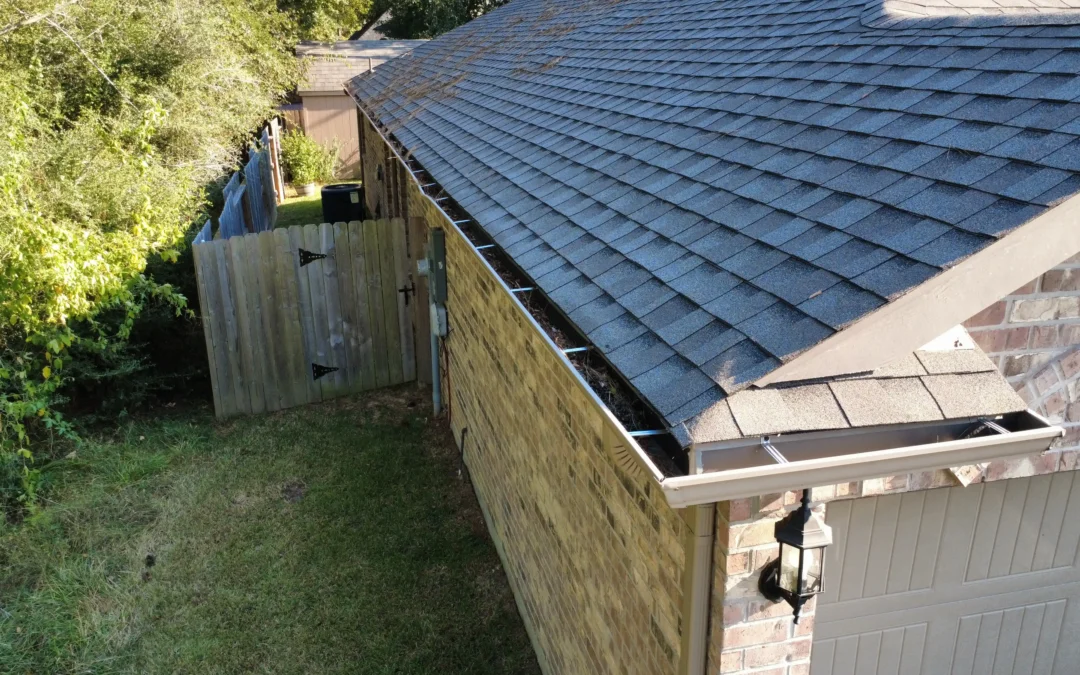
Gutter Pitch Problems: Why Water Sits in Your Gutters (And How to Fix It)
If your gutters are clean but water remains inside them long after the rain stops, the problem may be the way the system is draining rather than a clog. Gutter pitch problems can create low spots where water collects instead of moving efficiently toward the downspouts.
In Greater Houston, this becomes especially noticeable after heavy rainfall. A section that holds water may place additional weight on the gutter, contribute to sagging, reduce available capacity during the next storm, and increase the chance of overflow around the fascia and soffit.
The solution starts with identifying why the gutter is holding water—not simply cleaning it again.
How Gutter Pitch Is Supposed to Work
A gutter should have a slight, controlled slope that directs water toward its downspout outlets.
From the ground, a properly installed seamless gutter may appear almost level. In reality, its alignment should encourage water to move toward the designated drainage points without creating noticeable dips or reverse slopes.
Several factors affect the correct layout, including:
- Length of the gutter run
- Number and location of downspouts
- Roof area draining into the gutter
- Roof valleys and inside corners
- Gutter size
- Existing fascia condition
- Available drainage locations
For that reason, gutter pitch should be evaluated as part of the complete drainage system rather than by relying on one fixed measurement for every house.
Why Do Gutters Lose Their Proper Slope?
An incorrect gutter slope does not always mean the original installation was poor.
A gutter system can change over time as fasteners loosen, fascia materials deteriorate, or weight repeatedly stresses the same sections.
Common causes include:
- Loose or weakened hidden hangers
- Fasteners losing their hold
- Heavy debris that previously accumulated inside the gutter
- Repeated standing water
- Fascia deterioration
- Long gutter runs developing low points
- Previous repairs or modifications
- Poor original alignment
Once a low section develops, water may continue collecting there after each storm. The weight can place additional stress on the gutter and its attachment points.
Sagging Sections vs. Gutters Sloping the Wrong Way
Not all drainage problems look the same.
A sagging section creates a localized dip or belly in the gutter. Water reaches that low point and remains there instead of continuing toward the outlet.
A gutter with the wrong overall pitch may send water away from the intended downspout. In that situation, a larger portion of the run may drain slowly or hold water near the opposite end.
Both conditions can leave homeowners wondering why their gutters are not draining even though they are clean.
Why Is There Standing Water in Clean Gutters?
When standing water in gutters remains after the rest of the property has dried, it may indicate a drainage or alignment problem.
Possible causes include:
- A low spot in the gutter run
- Sagging between hanger locations
- Poor overall slope
- A partially restricted outlet
- Slow downspout drainage
- Movement along the fascia
- An outlet that is not positioned effectively for the run
A small amount of surface moisture after rain is not the same as a visible pool of water remaining in one section. Persistent water sitting in gutters deserves a closer look because the system should be directing runoff toward its outlets.
For other reasons a clean system may still have drainage problems, see [Link to: Why Clean Gutters Still Overflow].
Why Standing Water Matters in Greater Houston
Standing water is more than an appearance issue.
Added Weight on the Gutter System
Water held in one section adds continuous weight to the gutter, hidden hangers, fasteners, and fascia.
If the gutter is already beginning to sag, repeated loading can make the low area more noticeable over time.
Less Capacity During the Next Storm
A gutter that already contains water has less available room when the next heavy rainfall arrives.
Greater Houston storms can send a large amount of roof runoff toward the gutter in a short period. A low section may fill quickly and contribute to overflow around the front, back, or corners.
Moisture Around Fascia and Soffit
When water repeatedly reaches the top of the gutter or spills behind it, the fascia and soffit may be exposed to recurring moisture.
Watch for:
- Peeling or blistering paint
- Dark staining below the gutter
- Damp soffit areas
- Water marks around corners
- Gutters pulling away from the fascia
These signs do not automatically mean the fascia is rotten, but they may indicate that the drainage problem is beginning to affect nearby roofline materials.
Mosquito Activity
Water that remains undisturbed can also create conditions where mosquitoes may breed. This is another reason persistent standing water should not simply be ignored.
How Does Incorrect Gutter Pitch Contribute to Overflow?
An incorrect gutter slope changes where water collects and how efficiently it reaches the downspout.
During lighter rain, the system may appear to work normally. During a stronger storm, the low section may fill faster than it can drain.
Overflow can then occur:
- At the front edge
- Behind the gutter
- At an inside corner
- Below a roof valley
- Near a slow or restricted outlet
Pitch problems can also exist alongside downspout issues, so the gutter and outlet system should be evaluated together.
See [Link to: Downspout Problems That Cause Overflow] for more information on restricted outlets and downspout capacity.
Safe Checks Homeowners Can Make From the Ground
You can often spot early warning signs without climbing onto the roof.
After the weather has been dry for a reasonable period, look for:
- A section of gutter that visibly dips
- Water remaining in one accessible area
- Dirt or silt lines showing where water repeatedly sits
- Slow dripping long after the rain ends
- One end of a gutter holding more water than the other
- Gutter sections pulling away from the fascia
- Water stains on the outside of the gutter
- Overflow marks on fascia or soffit
- Slow drainage near a downspout
- Mosquito activity around a persistently wet section
Do not attempt repairs from an unsecured ladder or during wet conditions.
Why Gutter Re-Pitching Requires More Than Moving One Hanger
A common mistake is assuming that lifting one low section will automatically correct the drainage problem.
Professional gutter slope repair in Greater Houston usually starts by evaluating the entire run.
The inspection may include:
- Checking whether the fascia provides solid attachment points.
- Identifying high and low areas along the gutter.
- Inspecting hidden hangers and fasteners.
- Checking outlet and downspout locations.
- Realigning the gutter where necessary.
- Testing water flow after adjustments.
Moving one hanger without checking the rest of the run can simply move the low spot somewhere else.
If the gutter remains structurally sound, realignment may be possible without replacing the entire system. If it is distorted, damaged, poorly positioned, or attached to deteriorated fascia, replacement may be the more practical option.
See [Link to: Houston Gutter Repair & Realignment Services].
Frequently Asked Questions
How much standing water is normal in a gutter?
A properly draining gutter should not hold a noticeable pool of water for an extended period. Persistent puddling may indicate a low spot, alignment issue, or drainage restriction.
Can you fix gutter slope without replacing the whole gutter?
Often, yes. Structurally sound gutters may be realigned or re-pitched. Replacement may be recommended when the gutter itself is damaged, distorted, undersized, or attached to weakened fascia.
How do contractors adjust gutter pitch?
Contractors inspect the full gutter run, establish proper drainage toward the outlets, adjust hanger locations, check fascia attachment, and test the system afterward to confirm water moves correctly.
What happens if you ignore gutter pitch problems?
Persistent drainage problems may contribute to standing water, additional hanger stress, sagging, reduced storm capacity, overflow, and repeated moisture exposure around the fascia and soffit.
Fix the Drainage Pattern, Not Just the Symptom
Gutter pitch problems can be difficult to identify from the ground because a gutter may look straight while still holding water inside.
The right approach is to evaluate how the entire run drains—from the roof runoff entering the gutter to the outlet and downspout carrying the water away.
TXN Home Services provides gutter and roofline inspections throughout Greater Houston. We evaluate gutter alignment, hidden hangers, fascia condition, outlets, downspouts, and drainage flow before recommending repair, realignment, or replacement.
Call or text TXN Home Services at 346-460-9199 or visit TXNHomeServices.com to schedule a free gutter and roofline evaluation.
Built to last. Proven to protect.